KLOW
KLOW is a regenerative blend bringing together four peptides in a single 80 mg vial: GHK-Cu (50 mg), BPC-157 (10 mg), TB-500 (10 mg) and KPV (10 mg). Each component acts on a different tissue-repair pathway, so the formulation is framed as a multi-target approach rather than a single mechanism.
Rationale for the combination: extracellular matrix and collagen (GHK-Cu), local repair signalling (BPC-157), actin-mediated cell mobilisation (TB-500) and inflammatory modulation (KPV).
Blend Composition
KLOW is supplied as an 80 mg lyophilised vial grouping four peptides that each have independent, well-documented research profiles. The proportion is dominated by GHK-Cu, which contributes 50 of the 80 total milligrams.
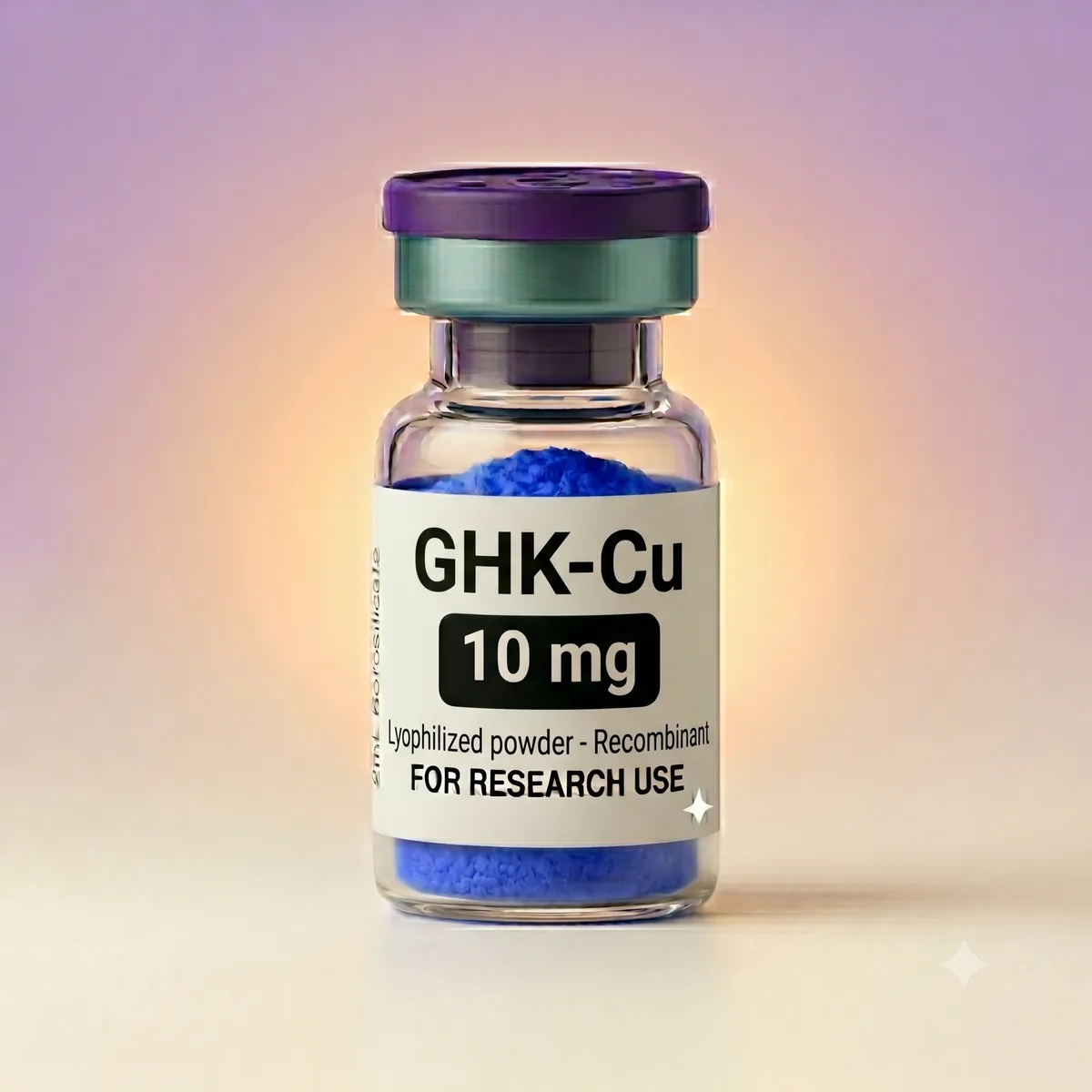
GHK-Cu — 50 mg
Copper tripeptide. The majority component and the most studied in extracellular matrix remodelling.
BPC-157 — 10 mg
Pentadecapeptide derived from a gastric protein, researched in soft tissue repair.
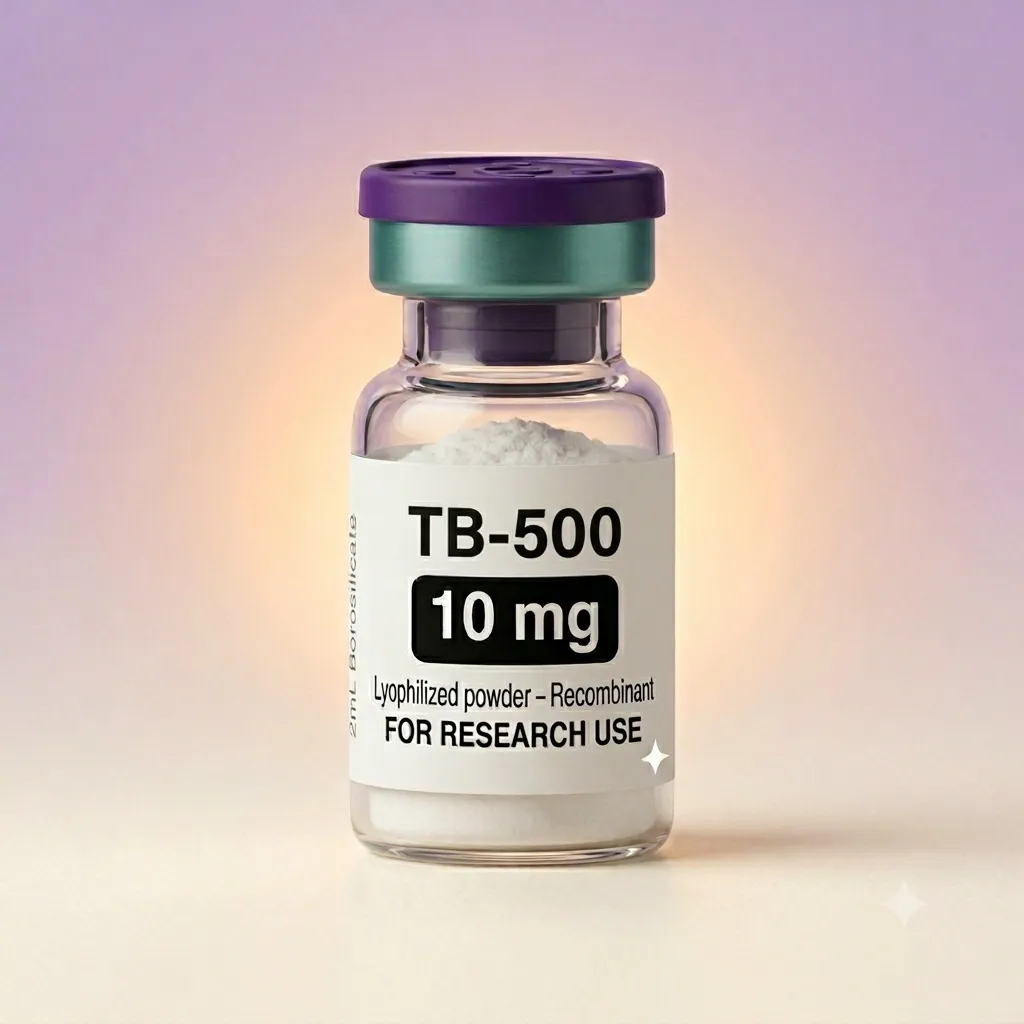
TB-500 — 10 mg
Synthetic fragment related to thymosin beta-4, linked to cell migration.
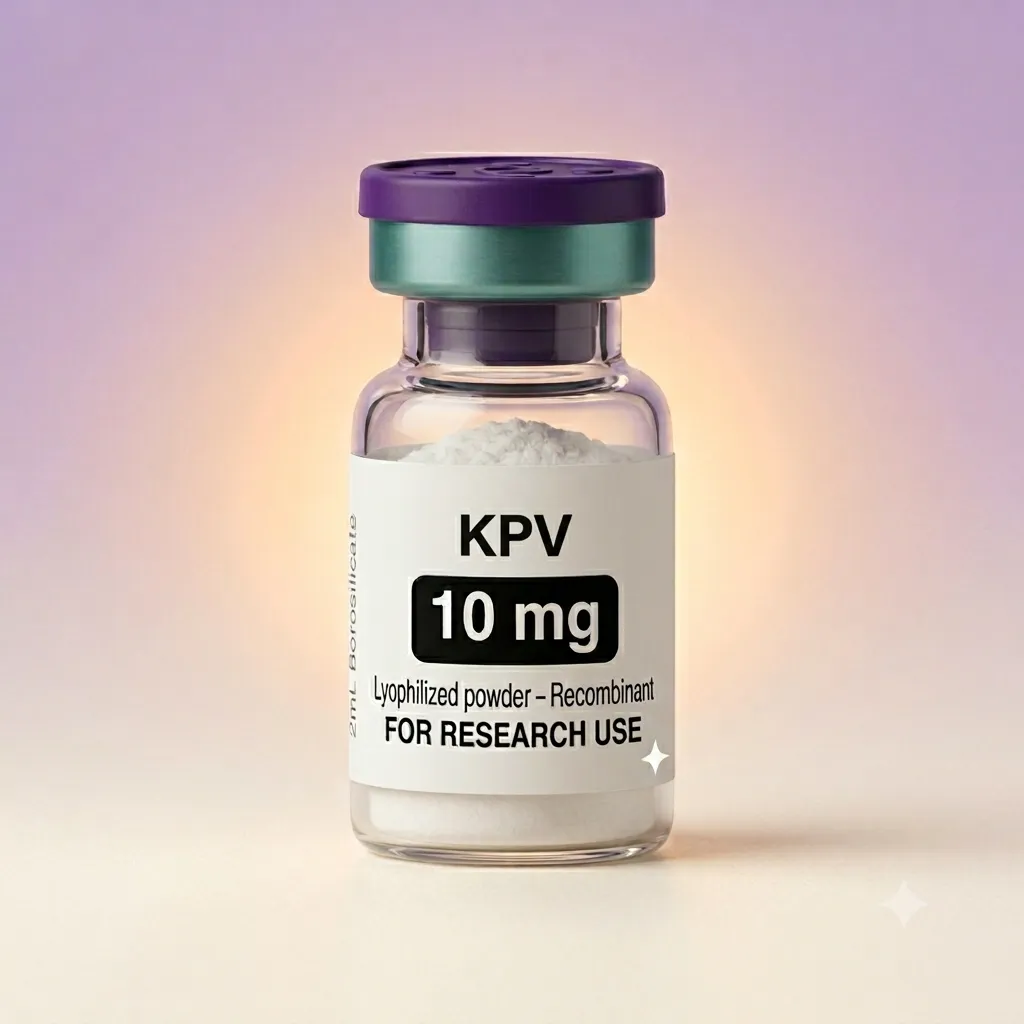
KPV — 10 mg
C-terminal tripeptide of α-MSH, studied for its role in inflammatory modulation.
Every peptide in the formula has its own educational profile on this site, with detailed mechanism, evidence and references: GHK-Cu, BPC-157, TB-500 and KPV.
Mechanism by Component
The research interest in KLOW does not lie in a new mechanism, but in the overlap of four pathways that, in the preclinical literature, act at different stages of the repair process.
GHK-Cu is a tripeptide with high affinity for copper (II). In cell culture it has been associated with modulation of gene expression related to collagen, elastin and proteoglycans, as well as the balance between matrix metalloproteinases and their inhibitors.(1)
BPC-157 is a stable pentadecapeptide derived from a sequence present in gastric juice. Animal models describe effects on angiogenesis and growth factor signalling in injured tissues.(2)
TB-500 corresponds to an active region of thymosin beta-4, a protein whose described function is G-actin sequestration. That role has been linked to cell motility and migration towards repair sites.(3)
KPV is the C-terminal tripeptide fragment of the α-MSH hormone. The literature describes it interfering with intracellular inflammatory pathways, including NF-κB signalling, in models of intestinal and cutaneous inflammation.(4)
Rationale for the Combination
Tissue repair is not a single event but a sequence: control of initial inflammation, arrival of cells at the affected site, formation of new matrix and final remodelling. KLOW's premise is to cover several of those stages simultaneously rather than intervening in only one.
- ✓Inflammatory phase: KPV contributes the inflammatory response modulation component.
- ✓Proliferative phase: TB-500 is associated with cell migration and BPC-157 with angiogenic signalling.
- ✓Remodelling phase: GHK-Cu concentrates the evidence on extracellular matrix and collagen.
- ✓Practicality: a single reconstituted vial instead of four separate preparations.
It is worth emphasising that this rationale is theoretical. That four compounds act on complementary phases in separate studies does not demonstrate that their combination produces an additive or synergistic effect, nor that the safety profile of the mixture equals the sum of its parts.
Evidence Status
There are no published clinical trials of KLOW as a combined formulation. All available evidence relates to the components evaluated individually, and mostly comes from in vitro studies and animal models. Extrapolation of those results to humans is not established.
The component with the largest body of literature is GHK-Cu, naturally present in human plasma and studied for decades in experimental dermatology and extracellular matrix biology. BPC-157 and TB-500 have extensive preclinical research bodies but limited controlled clinical translation. KPV is the most recent of the four in terms of research interest.
Safety Considerations
Important warnings
- KLOW holds no INVIMA registration nor approval from any regulatory agency for clinical use in humans.
- As a mixture, its interaction and safety profile has not been independently characterised.
- The copper content of GHK-Cu requires considering total copper intake in prolonged protocols or alongside other sources.
- No data are available in pregnancy, lactation, paediatric populations or in the presence of active oncological disease.
- Any consideration of use must be supervised by a qualified healthcare professional.
Reconstitution is performed with bacteriostatic water and the reconstituted vial requires refrigeration between 2 and 8 °C. The lyophilised material must be protected from light and moisture.
References
- Pickart L, Margolina A. Regenerative and Protective Actions of the GHK-Cu Peptide in the Light of the New Gene Data. Int J Mol Sci. 2018;19(7):1987.
- Sikiric P, Seiwerth S, Rucman R, et al. Stable gastric pentadecapeptide BPC 157: novel therapy in gastrointestinal tract. Curr Pharm Des. 2011;17(16):1612-1632.
- Goldstein AL, Hannappel E, Kleinman HK. Thymosin beta-4: actin-sequestering protein moonlights to repair injured tissues. Trends Mol Med. 2005;11(9):421-429.
- Dalmasso G, Charrier-Hisamuddin L, Nguyen HT, et al. PepT1-mediated tripeptide KPV uptake reduces intestinal inflammation. Gastroenterology. 2008;134(1):166-178.