Super Human Blend
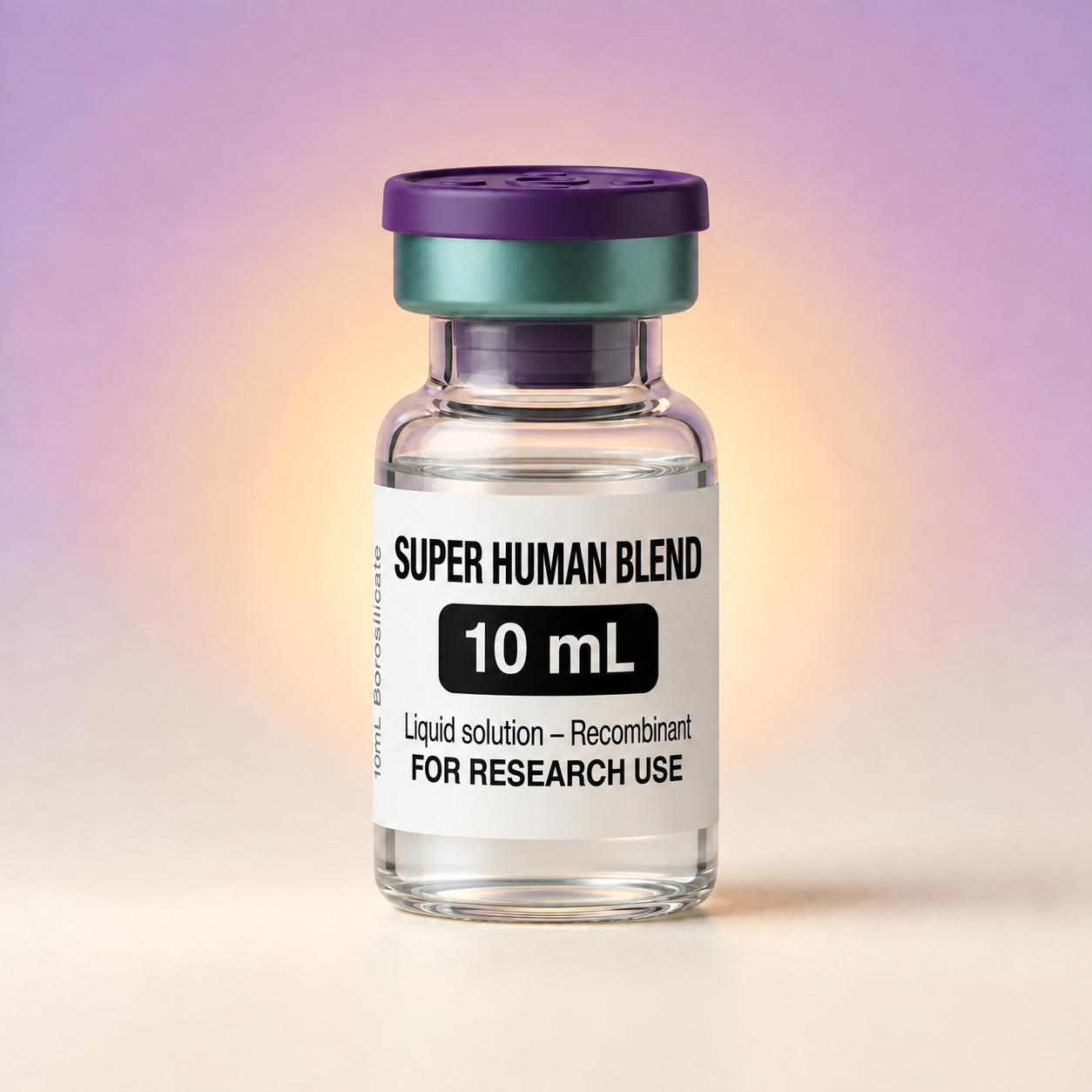
Super Human Blend is a 10 ml vial formulation combining amino acids with N-acetylcysteine (NAC), aimed at performance, energy and muscle recovery. The amino acids it contains relate to circulation, endurance and metabolic support.
Important: this is not a peptide. It is a formulation of free amino acids and a cysteine derivative, so its analytical frame is nutritional and metabolic.
Composition
Super Human Blend is supplied in a 10 ml vial and combines free amino acids with N-acetylcysteine. The formulation is oriented around three axes: performance, energy and muscle recovery.
N-acetylcysteine
Acetylated cysteine derivative, direct precursor of intracellular glutathione.
Amino acids
Profile related to circulation, endurance and metabolic support during exertion.
10 ml vial
Multi-dose solution presentation, for research use only.
As with Lipo-C, this product is not a peptide. It consists of free amino acids and a cysteine derivative, not a peptide sequence with signalling activity at a specific receptor.
NAC and Glutathione
N-acetylcysteine is the best characterised component of the formulation. It is an acetylated derivative of the amino acid cysteine, more stable and with a better absorption profile than free cysteine.
Its best documented function is serving as a glutathione precursor, the body's main intracellular antioxidant. Glutathione synthesis depends on three amino acids (glutamate, cysteine and glycine), and cysteine is usually the limiting factor. Supplying cysteine as NAC allows that synthesis to be sustained when demand rises.(1)
NAC additionally has an established, long-standing clinical use as an antidote in paracetamol poisoning, precisely through this hepatic glutathione replenishment mechanism.
Amino Acids, Circulation and Endurance
The amino acids included in the formulation relate to two axes described in the exercise literature.
Nitric oxide pathway. Some amino acids, particularly L-arginine, are precursors of nitric oxide, a molecule involved in vasodilation and in regulating blood flow to active muscle. Individual response to arginine supplementation varies and depends on factors such as arginase activity and baseline status.(2)
Muscle protein synthesis. Amino acids are the substrate for muscle protein synthesis. The literature has extensively discussed the extent to which isolated amino acids, without a complete protein intake, sustain that synthesis: evidence suggests the effect is limited when the other essential amino acids are missing.(3)
Recovery and Metabolic Support
The formulation's premise combines two distinct contributions: substrate (amino acids) and antioxidant capacity (NAC via glutathione). Intense exercise increases the production of reactive oxygen species and muscle protein turnover.
- ✓Substrate: amino acids supply material for tissue repair processes after exertion.
- ✓Antioxidant defence: NAC sustains cysteine availability for glutathione synthesis.
- ✓Metabolic support: components related to the use of energy substrates.
- ✓Relevant nuance: excessive suppression of oxidative stress could interfere with part of the training adaptation.
That last point deserves attention. Exercise-induced oxidative stress is not solely an adverse effect: it also functions as a signal that triggers adaptations. Several studies have explored whether high-dose antioxidant supplementation can blunt part of those adaptations, without a firm conclusion yet.
Evidence Status
NAC has an extensive literature and an established clinical use in specific indications. Amino acids have well described metabolic functions. What is not characterised is this specific combination, by injection, for athletic performance purposes.
No controlled clinical trials have been published on this combined formulation. The available evidence relates to the components evaluated separately and, in the case of amino acids, mostly by the oral route.
Safety Considerations
Important warnings
- This formulation does not hold INVIMA registration as a medicine.
- The safety profile of the injectable mixture has not been independently characterised.
- NAC may interact with nitrates and, in people with asthma, cases of bronchospasm have been described.
- Injectable administration carries a risk of local reaction, infection and hypersensitivity reactions.
- Those competing under anti-doping regulations must check each component against the current WADA list.
- Insufficient data are available in pregnancy, lactation or paediatric populations.
The vial requires refrigerated storage between 2 and 8 °C, protection from light and aseptic handling as a multi-dose presentation.
References
- Atkuri KR, Mantovani JJ, Herzenberg LA, Herzenberg LA. N-Acetylcysteine — a safe antidote for cysteine/glutathione deficiency. Curr Opin Pharmacol. 2007;7(4):355-359.
- Boger RH. The pharmacodynamics of L-arginine. J Nutr. 2007;137(6 Suppl 2):1650S-1655S.
- Wolfe RR. Branched-chain amino acids and muscle protein synthesis in humans: myth or reality? J Int Soc Sports Nutr. 2017;14:30.
- Longo N, Frigeni M, Pasquali M. Carnitine transport and fatty acid oxidation. Biochim Biophys Acta. 2016;1863(10):2422-2435.